
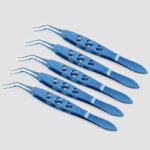
 Capsulorhexis Forceps
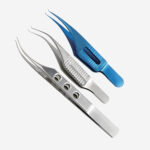 Suture Forceps
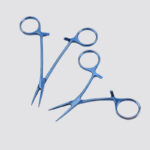 Hemostatic Forceps
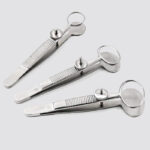 Chalazion Forceps
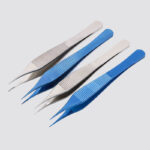 Adson Forceps
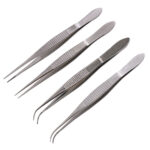 Tissue Forceps
Introduction of Ophthalmic Hemostatic Forceps
Ophthalmic hemostatic forceps are a commonly used medical device that is primarily used to control bleeding. It has two splints on the head and the part between the splints is serrated to clamp the blood vessel and prevent it from continuing to bleed. Normally, the device is usually used during surgery and can also be used to treat various incisions or wounds. The use of ophthalmic hemostatic forceps should be carefully sterilized and handled correctly to avoid infection and blood vessel damage.

Classification of Ophthalmic Hemostatic Forceps
ophthalmic hemostatic forceps can be divided into the following categories according to the method of use and structural characteristics:
- Direct compression ophthalmic hemostatic forceps: suitable for shallow wounds and less bleeding. This kind of ophthalmic hemostatic forceps clamp blood vessels, through mechanical compression or blockage of blood flow, to achieve the purpose of hemostasis.
- Tying-type ophthalmic hemostatic forceps: applicable to the case of large blood vessels or bleeding is more intense. This type of ophthalmic hemostatic forceps can stop bleeding by tying the thread or band around the blood vessel.
- cauterizing forceps: suitable for cases with small blood vessels or internal organ bleeding. This type of hemostat can be used to stop bleeding by means of high-frequency waves, lasers, or pulses, and is commonly used in surgery or the treatment of internal diseases.
- endoscopic ophthalmic hemostatic forceps: applicable to endoscopic surgery in the case of hemostasis. This kind of ophthalmic hemostatic forceps has a small head and flexible movable joints, which can visualize the internal bleeding situation and precisely clamp the blood vessels to achieve the purpose of hemostasis.
- Infrared ophthalmic hemostatic forceps: suitable for cases where the bleeding point is located in deep tissue structures that are difficult to reach. This type of ophthalmic hemostatic forceps can achieve hemostasis by irradiating infrared rays to the bleeding site, causing the tissue to coagulate.

Applications of Ophthalmic Hemostatic Forceps
Ophthalmic hemostatic forceps are instruments used to control bleeding during surgery or other medical procedures. Bleeding can be effectively controlled by clamping a blood vessel or tissue. In ophthalmic surgery, ophthalmic hemostatic forceps may be used to control small blood vessels or bleeding vessels so that the quality of the surgery is not compromised. For example, in cataract surgery, hemostats can be used to control bleeding from small blood vessels on the surface of the eye.
Principle of Ophthalmic Hemostatic Forceps
The principle of ophthalmic hemostatic forceps is to stop bleeding by clamping the bleeding artery or vein to compress the blood vessel. The two jaws of the ophthalmic hemostatic forceps can be adjusted to control the opening and closing of the jaws by adjusting the opening and closing of the handle bar, which in turn adjusts the strength and range of the clamped blood vessel. When the ophthalmic hemostatic forceps clamp the blood vessel, the compression force can compress the surface of the blood vessel and reduce bleeding, as well as reduce the damage and bleeding of the surrounding tissues. This method is suitable for smaller trauma and bleeding, not for large and deep bleeding.
Use of Ophthalmic Hemostatic Forceps
- Preparation: Remove ophthalmic hemostatic forceps and clean and sterilize; prepare site for hemostasis.
- Open the hemostat and place it over the site to be hemostatized.
- Use fingers or fingernails to grip the small button opening on the hemostat, press down with gentle force, and close the hemostat. Be sure to be gentle to avoid damage to skin and tissue.
- Confirm that the hemostat is tightly clamped around the bleeding site, then securely lock the hemostat’s locking clasp. If the bleeding site is small, align the small buckle opening with the bleeding point and then close the hemostat.
- Observe the bleeding to confirm that it has stopped. If more urgent hemostasis is required, then you may choose to have the casualty apply pressure to the bleeding site first.
- After the casualty is stabilized, the hemostat can be loosened and removed.
- When removing the ophthalmic hemostatic forceps, be sure to do so slowly to avoid sudden withdrawal of the forceps and damage to the tissues.
- After removing the ophthalmic hemostatic forceps, sterilized cotton balls or sterilized gauze will be used to disinfect the area.

Precautions for Ophthalmic Hemostatic Forceps
- Choose appropriate ophthalmic hemostatic forceps: choose different shapes and sizes of ophthalmic hemostatic forceps according to the need to ensure that they can accurately clamp the bleeding site.
- Disinfect and clean: Before using the ophthalmic hemostatic forceps, they must be disinfected and cleaned to avoid bacterial infection and cross-infection.
- Handle gently: When handling the ophthalmic hemostatic forceps, they should be gently clamped on the bleeding site to avoid excessive force or pinching of blood vessels, which may cause more serious bleeding.
- pay attention to the local bleeding: when using ophthalmic hemostatic forceps, pay special attention to the local bleeding, clean up with sterile gauze in time and apply pressure to stop bleeding.
- Maintain dryness of the bleeding site: After clamping the bleeding site, use sterilized gauze to scrape the bleeding site dry to prevent bacterial growth.
- Pay attention to the hemostatic time: the use of ophthalmic hemostatic forceps should be based on the bleeding situation and the method of hemostasis to choose the appropriate hemostatic time, generally not more than 15 minutes.
- Pay attention to the treatment after hemostasis: after hemostasis, it is necessary to bandage with sterilized gauze in time to avoid infection and re-bleeding. If needed, hemostatic drugs or suture treatment can also be used.

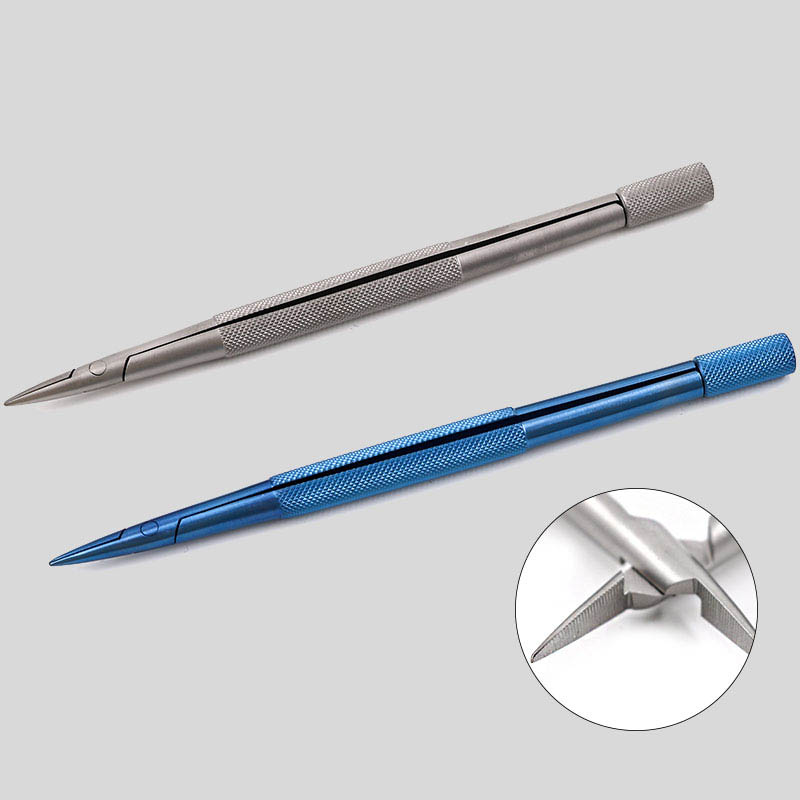
12cm Ophthalmic Blade Holder Surgical Instrument Castroviejo Blade Breaker


Vitreo Retinal Forceps Intraocular Ophthalmic Surgery Instrument 20G/23G/25G/27G


Needleke Injection Suction Handle Wrench Ophthalmic Instrument

Ophthalmic Curved Suture Tying Forceps Surgical Instrument with Three-hole


12.5cm Stainless Crile Hemostatic Forceps Surgical Arterial Forceps


Stainless Utrata Capsulorhexis Forceps Ophthalmic Instrument with Flat Handle
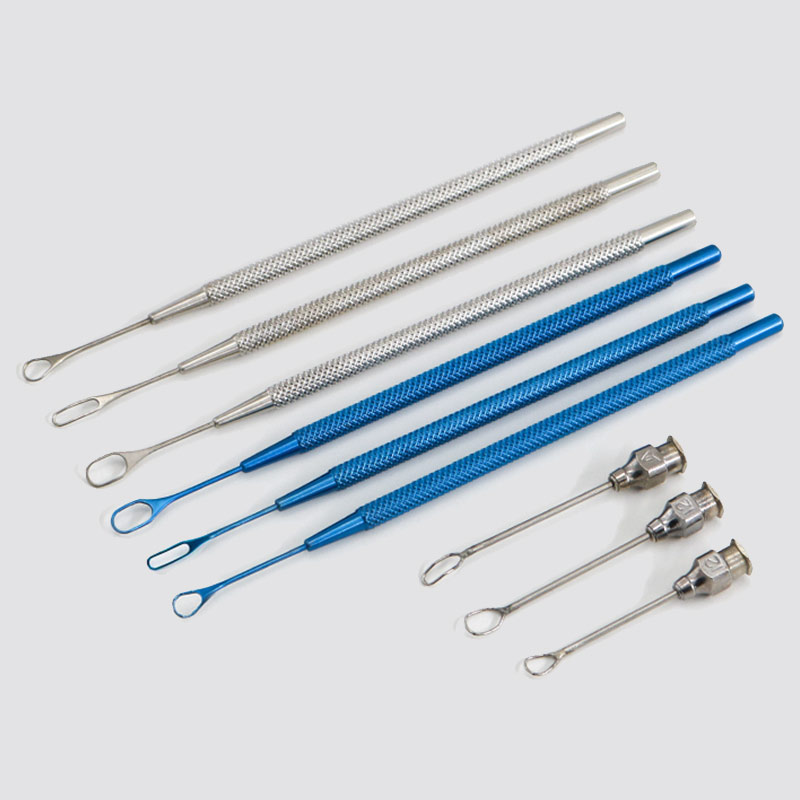
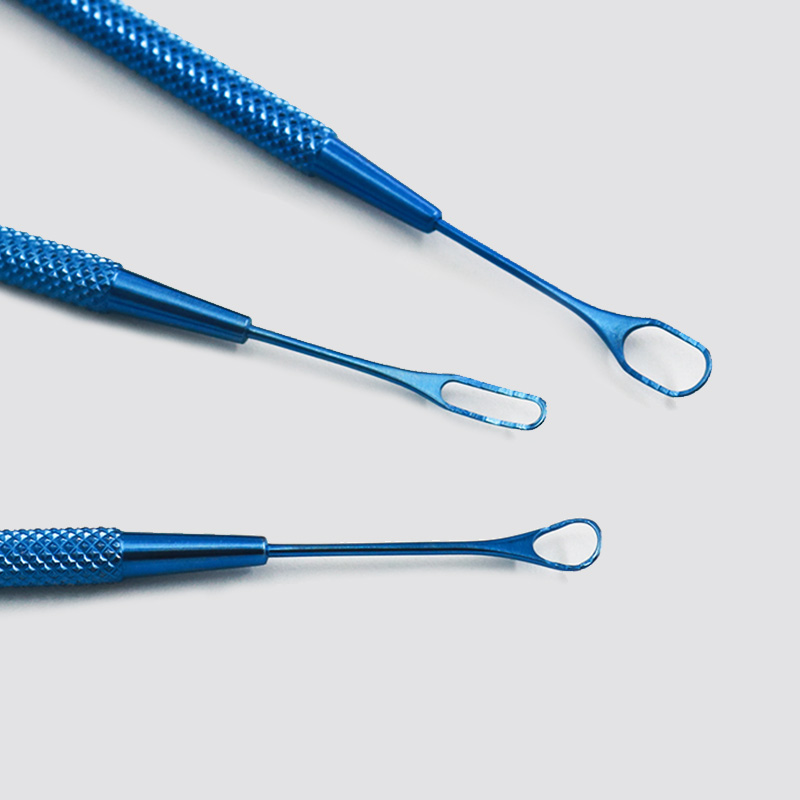
Ophthalmic Lens loop Serrated Eye Surgical Instrument


Capsulorhexis Forceps Retinal Ophthalmic Surgical Instrument Titanium Alloy


Sponge Holding Forceps Straight/Curved Hemostatic Forceps Instruments

